
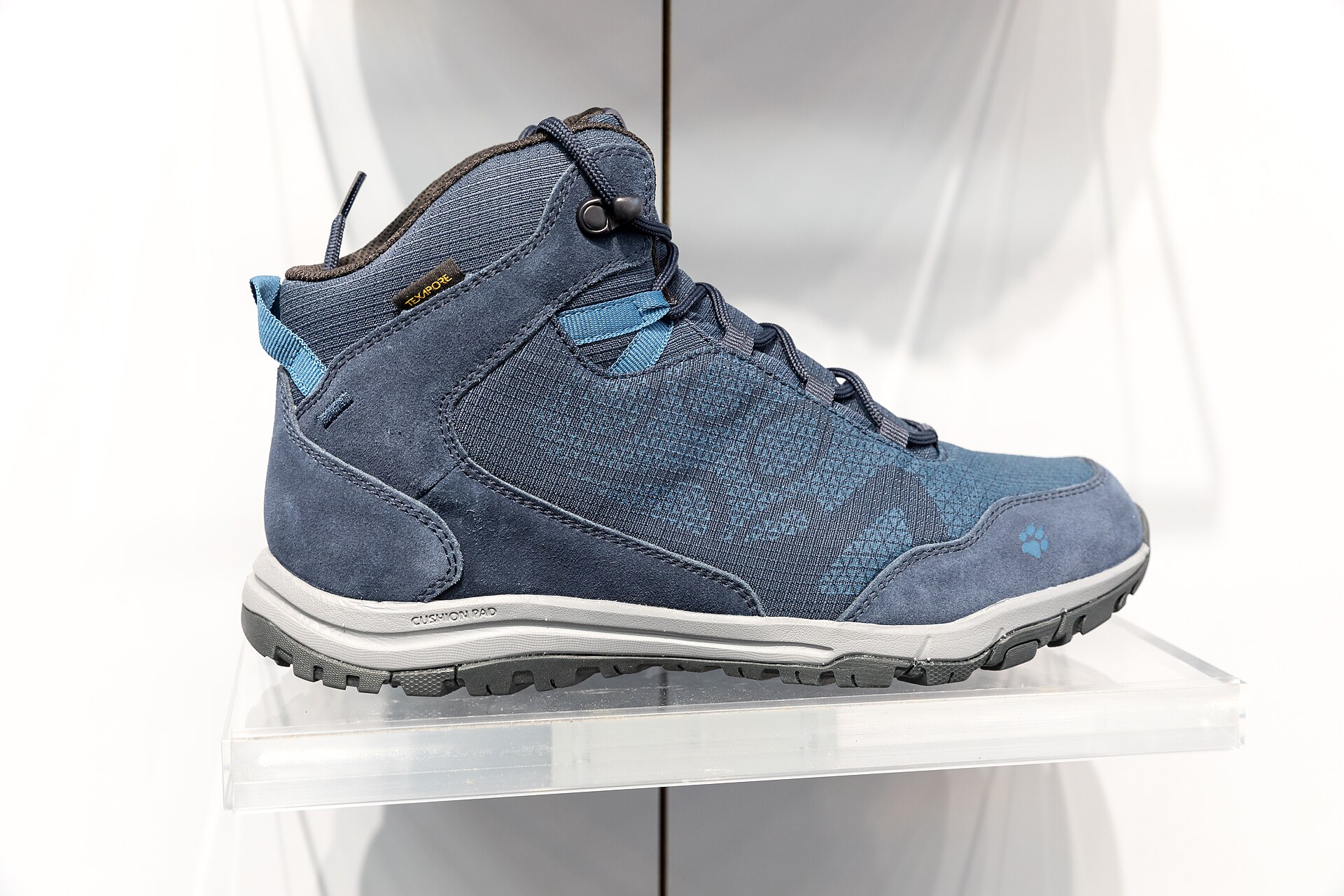
The right shoe determines sure-footedness, comfort and a blister-free day in the mountains. We show what matters and which models impress, from entry-level to mountaineering boots.
Our picks at a glance
Hanwag Tatra Light GTX
Frequent hikers/trekkers looking for a light, supportive cat. B boot for demanding multi-day tours.
Check priceLowa Renegade GTX Mid
Beginners and leisure hikers looking for a comfortable all-rounder for hut tours and A/B trails.
Check priceScarpa Mescalito TRK GTX
Demanding trekkers (e.g. a trans-Alpine crossing) who want a durable premium boot with a heavy pack.
Check priceModels compared
| Model | Key specs | Price | |
|---|---|---|---|
| Hanwag Tatra Light GTX Our choice | Weight: approx. 1000–1200 g/pair · Shaft height: high · Membrane: Gore-Tex · Sole: Vibram Integral Light · Crampons: limited (cat. B) | €€€ approx. 230–270 € (please check) | Check price |
| Lowa Renegade GTX Mid Best value | Weight: approx. 1010–1080 g/pair · Shaft height: mid-high · Membrane: Gore-Tex · Sole: Vibram Evo · Crampons: no (cat. A/B) | €€€ approx. 200–230 € (please check) | Check price |
| Lowa Explorer II GTX Mid Entry-level | Weight: approx. 980 g/pair · Shaft height: half-high · Membrane: Gore-Tex · Sole: Vibram · Crampons: no (cat. A/B) | €€ approx. 150–180 € (please check) | Check price |
| Salewa Mountain Trainer Lite Mid GTX Lightweight | Weight: approx. 1130 g/pair (men) · Shaft height: mid-high · Membrane: Gore-Tex Extended Comfort · Sole: Pomoca MTN Trainer Lite · Crampons: no | €€€ approx. 190–220 € (please check) | Check price |
| Scarpa Mescalito TRK GTX Premium | Weight: approx. 1320 g/pair · Shaft height: mid-high to high · Membrane: Gore-Tex · Sole: Vibram XS Trek Evo · Crampons: no (cat. B) | €€€€ approx. 260–300 € (please check) | Check price |
| La Sportiva Trango Tech Leather GTX Mountaineering boot | Weight: approx. 1280 g/pair · Shaft height: high · Membrane: Gore-Tex Performance Comfort · Sole: Vibram (La Sportiva Cube) · Crampons: limited (cat. B/C, semi-automatic) | €€€€ approx. 250–300 € (please check) | Check price |
Prices as a guide, please verify. Advertising.
What to look for
- Use category A/B/C: A = easy trails, B = demanding mountain hiking/light trekking, C = high-alpine/crampon-compatible. Choose by your hardest planned use.
- Shaft height: low = light/agile; mid/high = more ankle support in scree, but heavier.
- Sole: grippy, sufficiently stiff profiled sole (e.g. Vibram); the more technical, the stiffer/more torsion-stable.
- Membrane (GTX): keeps moisture out, costs a little ventilation; for dry heat a non-membrane version is more comfortable.
- Fit/last: brand-dependent (narrow/normal/wide); heel firm, toes free; try on in the afternoon with hiking socks.
- Always weigh weight against the intended use.
- Crampon compatibility B/C: only stiff soles with welts are crampon-compatible (semi-automatic).
The models in detail
Hanwag Tatra Light GTX Our choice
Weight: approx. 1000–1200 g/pair · Shaft height: high · Membrane: Gore-Tex · Sole: Vibram Integral Light · Crampons: limited (cat. B) · approx. 230–270 € (please verify)
Frequent hikers/trekkers looking for a light, supportive cat. B boot for demanding multi-day tours.
Pros: Top ratio of low weight and stability · High, well-supporting shaft for trekking · Robust suede leather with Gore-Tex
Cons: Runs rather narrow · Occasional blisters during break-in
→ View Hanwag Tatra Light GTX (Advertising)
Lowa Renegade GTX Mid Best value
Weight: approx. 1010–1080 g/pair · Shaft height: mid-high · Membrane: Gore-Tex · Sole: Vibram Evo · Crampons: no (cat. A/B) · approx. 200–230 € (please verify)
Beginners and leisure hikers looking for a comfortable all-rounder for hut tours and A/B trails.
Pros: High comfort out of the box, considered blister-friendly · Proven classic · Good cushioning and solid grip
Cons: Too soft for technical high-alpine terrain · Not crampon-compatible
→ View Lowa Renegade GTX Mid (Advertising)
Lowa Explorer II GTX Mid Entry-level
Weight: approx. 980 g/pair · Shaft height: half-high · Membrane: Gore-Tex · Sole: Vibram · Crampons: no (cat. A/B) · approx. 150–180 € (please verify)
Budget-conscious beginners for low mountains and easy alpine trails.
Pros: Affordable entry, good value · Light and comfortable · Waterproof and breathable
Cons: Some moisture on wet grass · Limited robustness/support
→ View Lowa Explorer II GTX Mid (Advertising)
Salewa Mountain Trainer Lite Mid GTX Lightweight
Weight: approx. 1130 g/pair (men) · Shaft height: mid-high · Membrane: Gore-Tex Extended Comfort · Sole: Pomoca MTN Trainer Lite · Crampons: no · approx. 190–220 € (please verify)
Ambitious mountain hikers with a narrow foot, for rocky trails/approach.
Pros: Very light and agile · Precise guidance on rocky terrain (3F system) · Comfortable with a short break-in
Cons: Waterproofing in the toe area fades over time · Narrow last
→ View Salewa Mountain Trainer Lite Mid GTX (Advertising)
Scarpa Mescalito TRK GTX Premium
Weight: approx. 1320 g/pair · Shaft height: mid-high to high · Membrane: Gore-Tex · Sole: Vibram XS Trek Evo · Crampons: no (cat. B) · approx. 260–300 € (please verify)
Demanding trekkers (e.g. a trans-Alpine crossing) who want a durable premium boot with a heavy pack.
Pros: High-quality Perwanger leather · Excellent grip on snow/mud/rock, stable under load · Good energy absorption on descent
Cons: Rather narrow · High price
→ View Scarpa Mescalito TRK GTX (Advertising)
La Sportiva Trango Tech Leather GTX Mountaineering boot
Weight: approx. 1280 g/pair · Shaft height: high · Membrane: Gore-Tex Performance Comfort · Sole: Vibram (La Sportiva Cube) · Crampons: limited (cat. B/C, semi-automatic) · approx. 250–300 € (please verify)
Alpinists for high tours, scree and easy firn/ice passages.
Pros: Versatile B/C boot, light for a crampon-compatible model · Very good grip, climbing zone at the toe · High comfort
Cons: Limited durability after several years (user reports) · Too soft for pure ice climbing
→ View La Sportiva Trango Tech Leather GTX (Advertising)
FAQ
Do I always need a high mountaineering boot for alpine tours?
No. For hut walks and waymarked mountain trails a mid-high A/B shoe is often enough; a stiff B-/B/C boot only for scree, snowfields, glacier or via ferrata with crampons.
What do A, B and C mean?
A = light hiking shoes (easy trails), B = sturdier shoes (mountain hiking/light trekking), C = stiff, crampon-compatible mountaineering boots (high-alpine). Intermediate grades A/B, B/C cover the transition.
Gore-Tex or without membrane?
GTX keeps you dry in wet/snow (useful in changeable alpine weather). If you mostly walk in dry heat, you'll be cooler without a membrane and the shoe dries faster.
How important is the brand vs. the fit?
Fit beats brand. Meindl/Hanwag/Lowa tend to run wider/normal, Salewa/La Sportiva/Scarpa often narrower. Try several lasts.
Do I need to break in new mountaineering boots?
Yes, especially models with a high leather content/stiff sole should be broken in several times before the first big tour to avoid pressure points.
Transparency: With Advertising marked links are advertising/affiliate links. More in the Privacy Policy.