


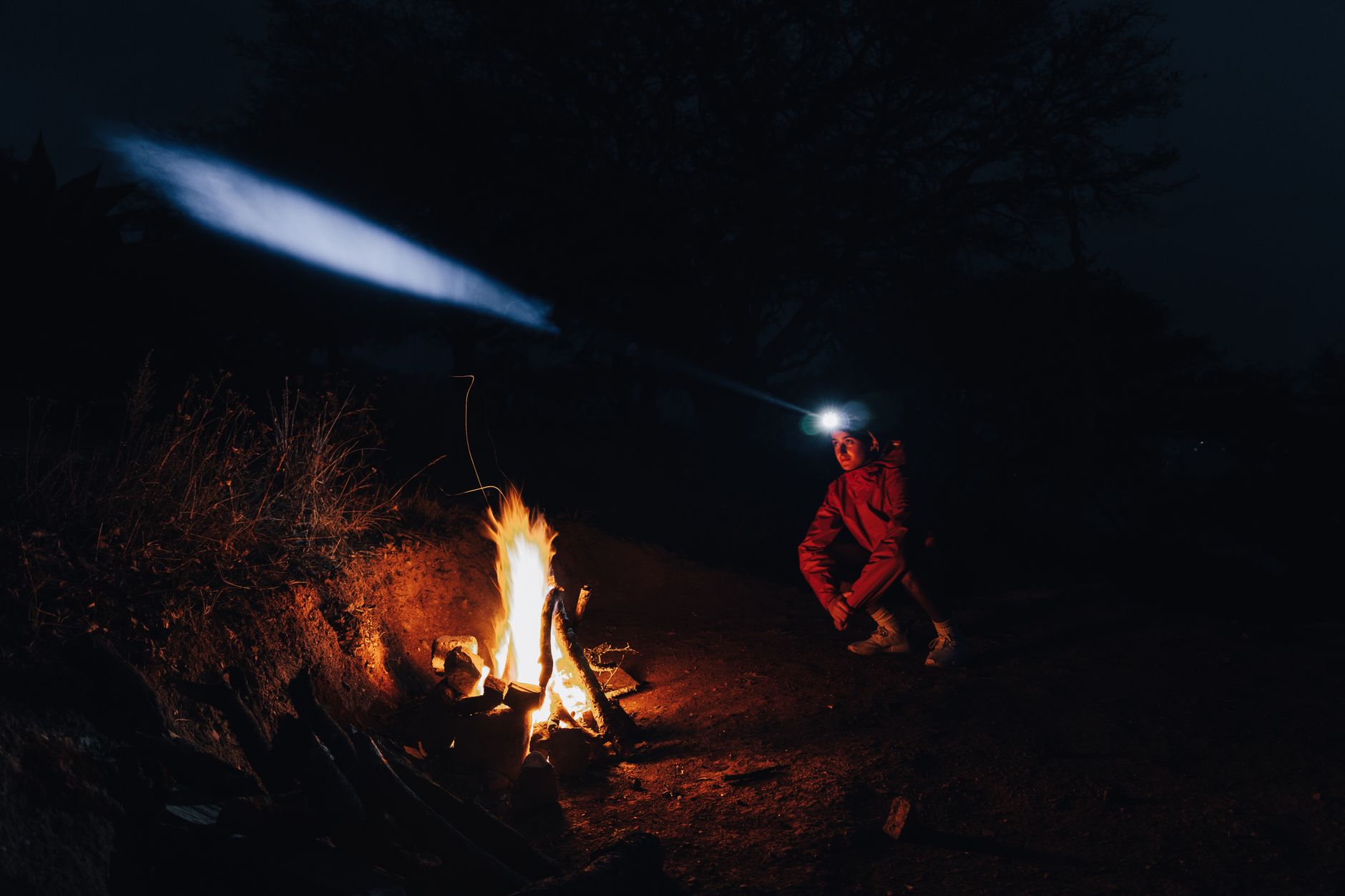
A headlamp belongs in every pack, whether for an early start before sunrise, the descent at dusk or an overnight at the hut. Your hands stay free and the light follows your gaze. What matters is brightness, battery life and a good operating concept. We show which models impress, from the affordable entry-level to the powerful lamp.
Our recommendations at a glance
Petzl Actik Core
The versatile all-rounder: a swappable battery or AAA cells, red light and enough power for almost any tour.
Check priceBlack Diamond Spot
A bright, waterproof lamp with a dimming function at a fair price, a proven companion for hikers.
Check pricePetzl Bindi
A tiny emergency and travel lamp that weighs almost nothing yet shines decently, ideal as a backup.
Check priceModels compared
| Model | Power source | Brightness (approx.) | Strength | Price range | |
|---|---|---|---|---|---|
| Petzl Actik Core Our pick | Battery + AAA (hybrid) | ~450 lm | Flexible, red light, good all-rounder | €€ | Check price |
| Black Diamond Spot Best value | AAA cells | ~400 lm | Waterproof, steplessly dimmable | €€ | Check price |
| Ledlenser MH5 / MH7 Focusable | Battery + cells | ~400-600 lm | Focusable beam, German brand | €€€ | Check price |
| Petzl Bindi Lightweight | Built-in battery (USB) | ~200 lm | Tiny and feather-light | €€ | Check price |
| Petzl Tikkina Entry-level | AAA cells | ~300 lm | Simple, affordable, reliable | € | Check price |
| Nitecore (e.g. NU25 / HC65) Powerful | Battery (USB-C) | ~400-1000 lm | Very bright, long reach | €€€ | Check price |
Price ranges as a guide: € affordable to €€€€ premium. Brightness and runtime depend on the mode, to be checked. Advertising.
What to look for
- Brightness & beam distance: For an evening at the hut 50 to 100 lumens is enough; for hiking in the dark 200 to 400 lumens is pleasant. More lumens often mean more reach but also shorter runtime; a broad near field is usually more important when walking than a far spot.
- Battery or cells: Rechargeable batteries are cheaper to run and more eco-friendly; disposable cells can be bought anywhere on the move and are more reliable in the cold. Hybrid lamps that take both combine the advantages and are ideal for tours.
- Red light: Red light does not dazzle others in the hut or tent and preserves night vision. Anyone searching for something in the dormitory or reading a map appreciates this function greatly.
- Light modes & dimming: Several brightness levels save battery and adapt the light to the situation. Stepless dimming is convenient, and a memory function (starts at the last-used level) prevents dazzling when switching on.
- Weight: A light lamp does not press and is more likely to come along in the pack. For long tours or as a backup every gram counts; for home use it is secondary.
- Water protection (IPX): Look for an IPX rating. IPX4 withstands splashes and rain; higher values cope with heavier wet. For mountain tours in any weather, good splash protection is a must.
The models in detail
Petzl Actik Core Our pick
Hybrid (Core battery or 3x AAA) · ~450 lm · red light · IPX4 · price range €€ (to be checked)
The Actik Core is the ideal all-rounder because it accepts both the supplied battery and ordinary AAA cells. So you run it cheaply on the battery in everyday use and can buy cells in an emergency on tour. Enough brightness, red light and a simple operating concept make it a safe choice for almost everyone.
Pros: Works with battery and cells · bright enough · red light and simple operation.
Cons: No USB-C on the housing itself (battery charged separately) · not the brightest lamp in the field.
→ View Petzl Actik Core (Advertising)
Black Diamond Spot Best value
3x AAA · ~400 lm · steplessly dimmable · IPX8 (waterproof) · price range €€ (to be checked)
The Spot has been a favourite for years because it offers a lot for the money: bright enough, steplessly dimmable and, thanks to IPX8, even protected against brief submersion. The touch operation takes a little getting used to, but is convenient after that. An honest hiking lamp without frills.
Pros: Very well waterproofed · steplessly dimmable · fair value for money.
Cons: Touch operation takes getting used to · runs on cells rather than a built-in battery.
→ View Black Diamond Spot (Advertising)
Ledlenser MH5 / MH7 Focusable
Hybrid (battery + cells) · ~400-600 lm · focusable beam · price range €€€ (to be checked)
Ledlenser is a German brand known for its focusable optics: with a twist ring you switch the light from broad floodlight to a far spot. The MH5 is compact, the MH7 more powerful. Anyone who likes to switch between near field and reach gets a practical concept here.
Pros: Focusable beam · good build · works with battery and cells.
Cons: Focus mechanism makes the head a little bigger · no red light on all models.
→ View Ledlenser MH5 / MH7 (Advertising)
Petzl Bindi Lightweight
Built-in battery (USB) · ~200 lm · approx. 35 g · red light · price range €€ (to be checked)
The Bindi weighs almost nothing and disappears into any pocket, ideal as an emergency or travel lamp. Despite its tiny size it shines surprisingly well for its purpose and charges via USB. As a backup alongside the main lamp or for minimalists, a clever choice.
Pros: Extremely light and small · USB-chargeable · good backup for any pack.
Cons: Limited runtime on high · built-in battery not swappable.
→ View Petzl Bindi (Advertising)
Petzl Tikkina Entry-level
3x AAA · ~300 lm · simple operation · price range € (to be checked)
The Tikkina is Petzl’s simple, affordable entry-level lamp: one button, three brightness levels, done. It shines reliably for an evening at the hut, camping and occasional hiking. Anyone looking for a thoroughly solid lamp without extras is well served here at a low price.
Pros: Very affordable · child’s-play operation · reliable and robust.
Cons: No red light · no particularly long reach.
→ View Petzl Tikkina (Advertising)
Nitecore Powerful
Battery (USB-C) · ~400-1000 lm depending on model · long reach · price range €€€ (to be checked)
Nitecore builds powerful lamps for anyone who wants plenty of light and reach, for example for night tours or demanding terrain. Models like the NU25 (light) or HC65 (very bright) charge via USB-C and offer many modes. In return, the operation is a little more technical than with the classics.
Pros: Very bright with long reach · USB-C charging · many light modes.
Cons: More complex to operate · high brightness costs runtime.
→ View Nitecore (Advertising)
FAQ
How many lumens does a headlamp need?
For an evening at the hut or in the tent 50 to 100 lumens is enough; for hiking in the dark 200 to 400 lumens is pleasant. Very high values are only needed for reach or night tours and shorten runtime considerably. More important than the peak value is a well-lit near field.
Battery or cells?
Rechargeable batteries are cheaper to run and more eco-friendly; disposable cells can be bought anywhere on the move and are more reliable in the cold. Hybrid lamps take both and are therefore especially practical for tours; in an emergency you simply insert cells.
What is the red light for?
Red light does not dazzle others in the hut or tent and preserves your own night vision. Anyone searching for something in the dormitory at night or reading a map disturbs no one and still sees enough.
What is Reactive Lighting?
Reactive Lighting (on some Petzl models) measures ambient light via a sensor and adjusts brightness automatically. Look at the nearby map and the lamp dims; look into the distance and it brightens. It saves battery and fiddling, but is not a must.
Transparency: The links marked with Advertising are advertising/affiliate links. Read more in our privacy policy. Related to this topic: Packing list for the hut tour and our guide Hut hiking for beginners.