'/%3E%3C/svg%3E)


'/%3E%3Cpath%20fill='%23b2b2b2'%20d='M241%20382q0%2016%2017%2026%2017%2011%2042%2011t42-11q16-11%2017-26V269H241'/%3E%3Cpath%20fill='%239f7e00'%20d='M241%20379q0%2014%208%2023%209%209%2021%209%2014%200%2021-9%209-9%209-23V269h-59'/%3E%3Cpath%20d='M241%20339v-70h59v110q0%2014-9%2023l-6%205v-68h-15v72q-8%200-14-4v-68zm59%2040c0%2022%2015%2032%2029%2032%2021%200%2030-18%2030-32v-40h-59'/%3E%3Cpath%20fill='%239f7e00'%20d='M266%20277v5h2v12h-3v-5h2v-5h-9v5h2v5h-4v9h3v18h-5v10h34v-10h-5v-18h3v-9h-4v-5h2v-5h-9v5h2v5h-3v-12h2v-5zm42%20101q0%2010%206%2017%206%206%2015%207%2010-1%2016-7%206-7%206-17v-29h-43'/%3E%3Ccircle%20fill='%230044ad'%20cx='329.5'%20cy='372'%20r='6'/%3E%3Cellipse%20fill='%230044ad'%20cx='300'%20cy='340'%20rx='16'%20ry='21'/%3E%3C/svg%3E)

'/%3E%3C/g%3E%3Cuse%20href='%23c'%20transform='matrix(-1%200%200%201%20720%200)'/%3E%3C/svg%3E)


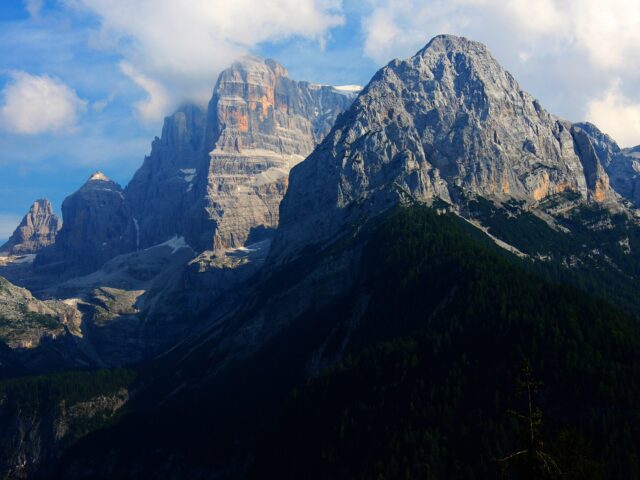
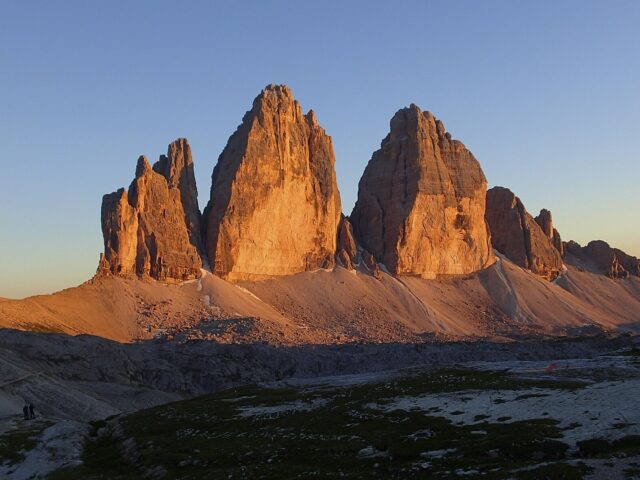
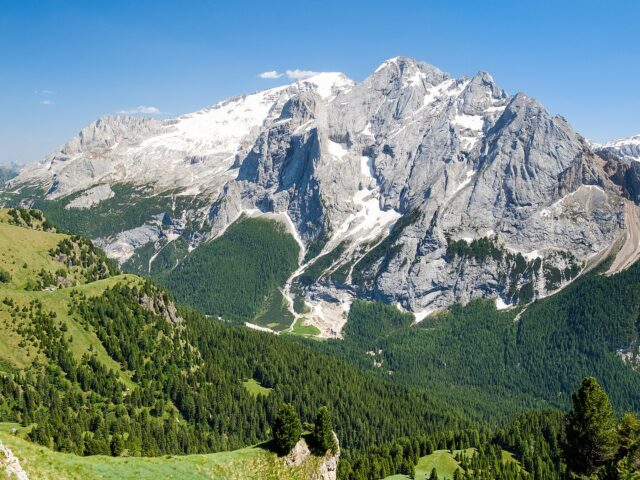
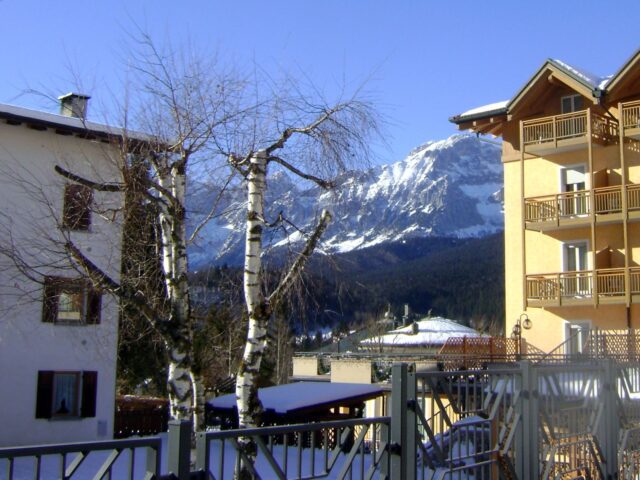
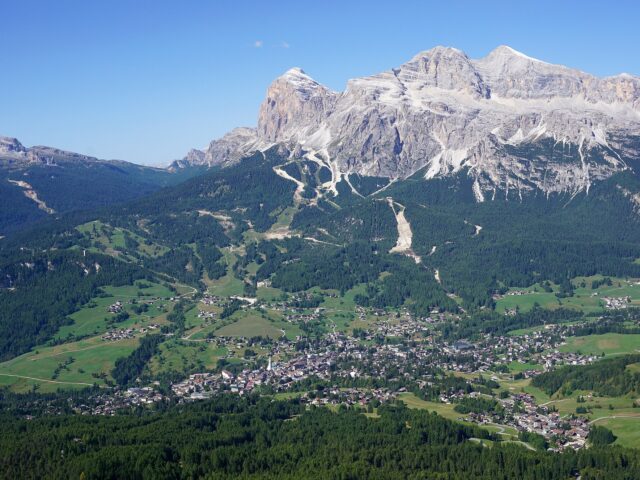
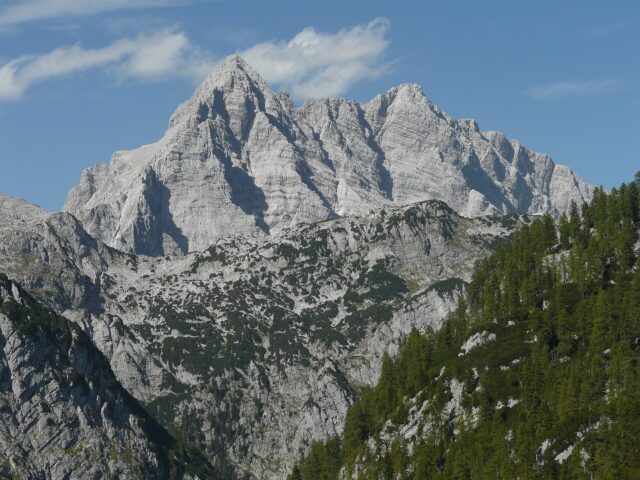
Pale di San Martino
The largest high plateau in the Dolomites
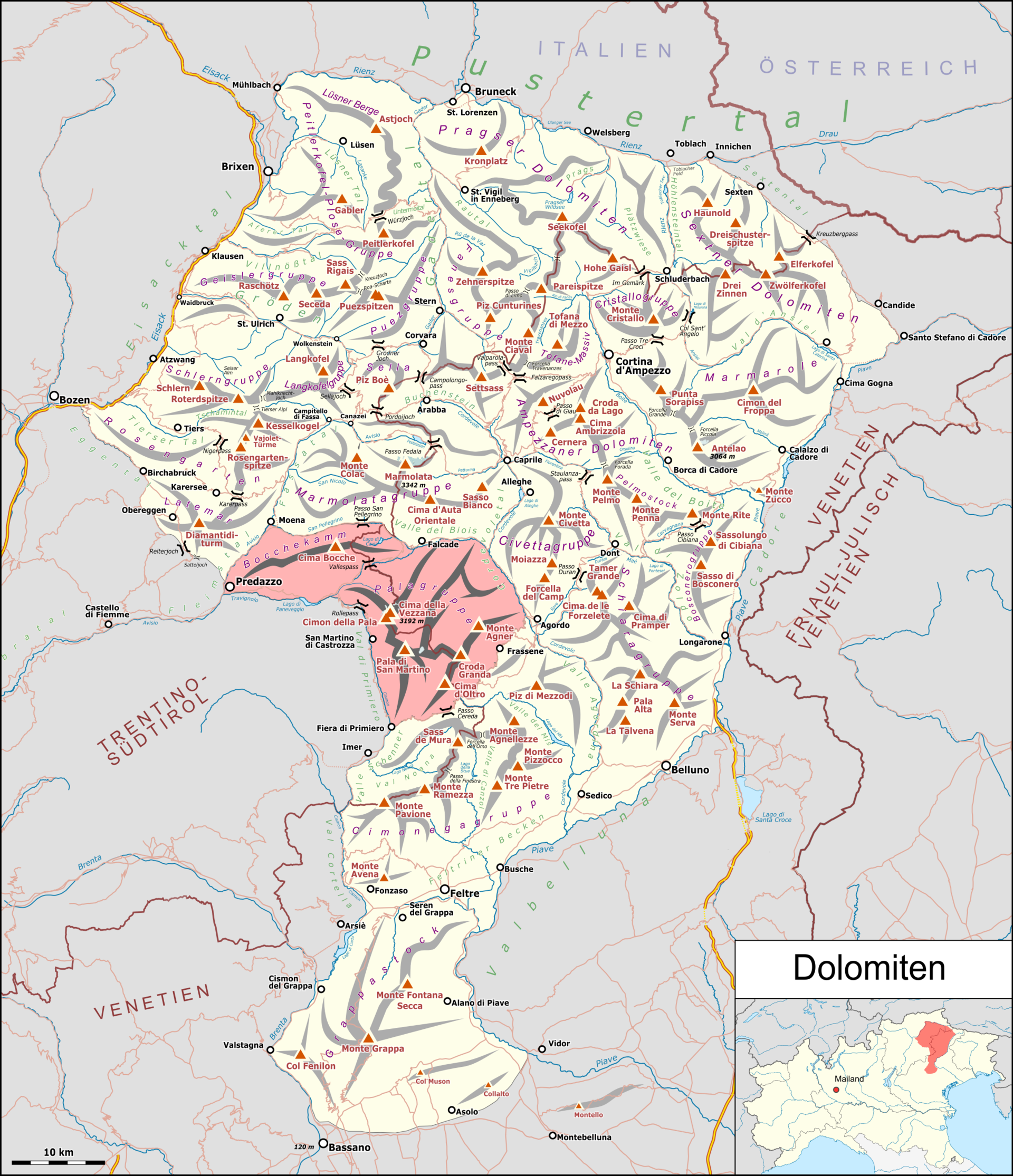
Foto: NordNordWest / Wikimedia Commons (CC BY 3.0)
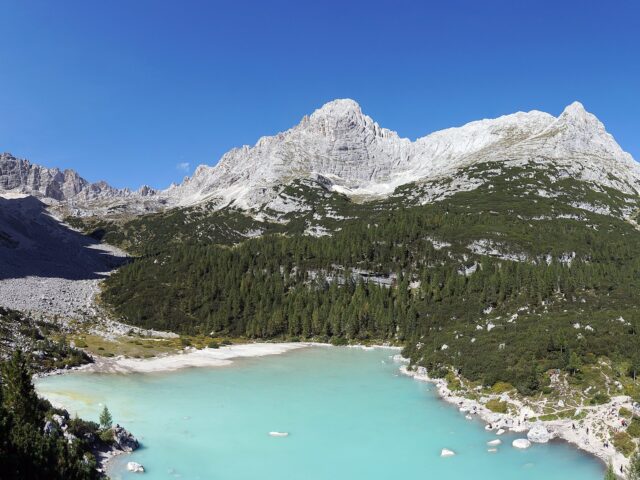
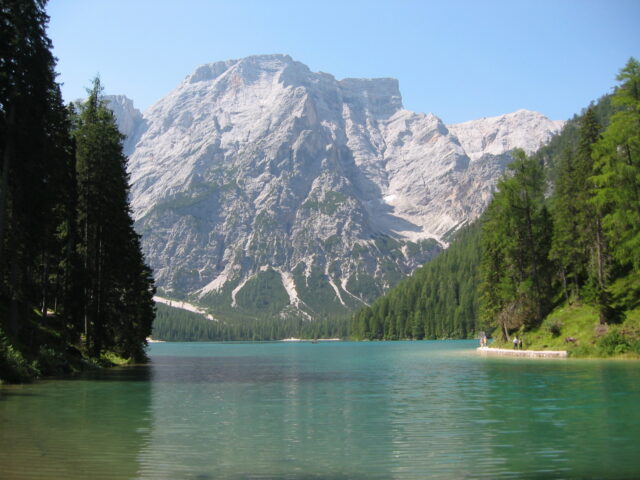
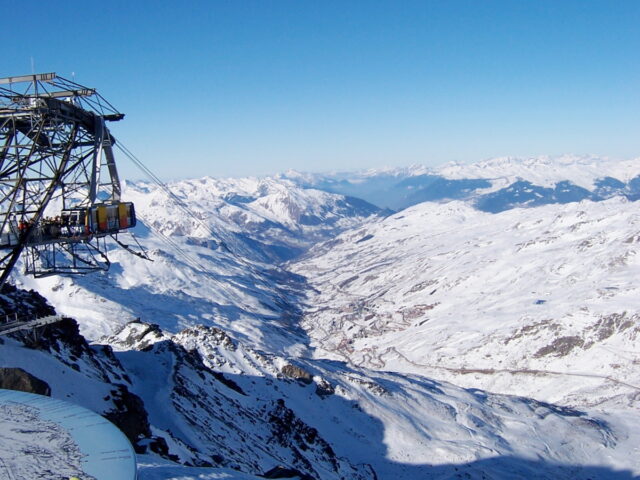
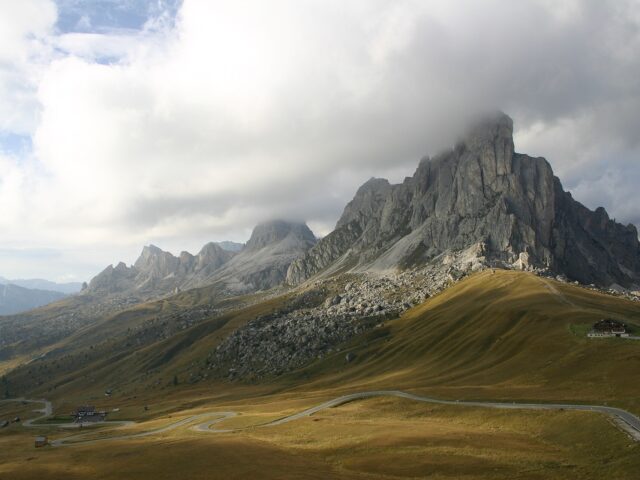
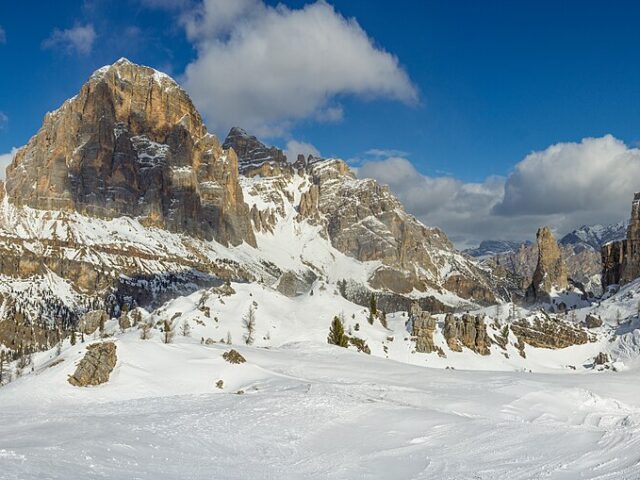
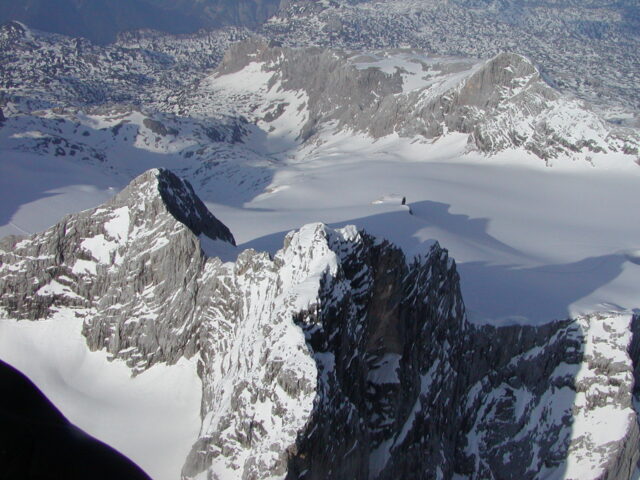
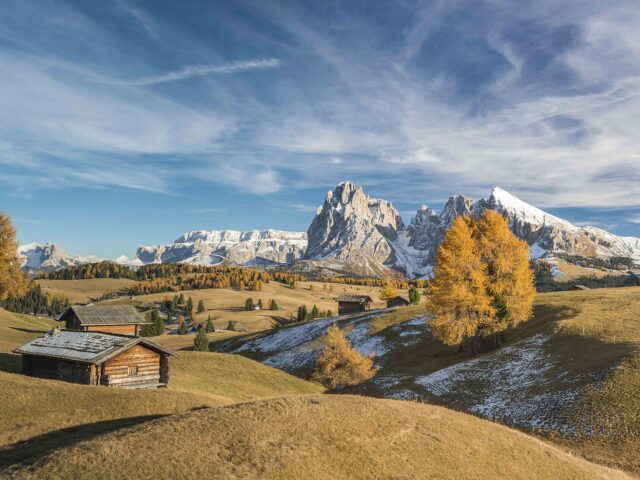
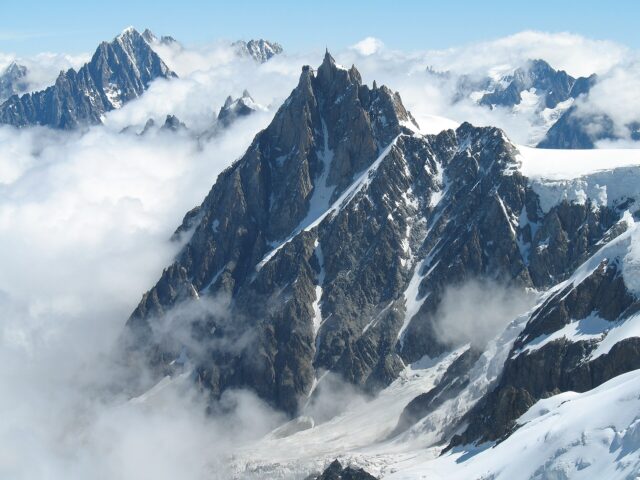
The Pala group is the largest massif of the Dolomites and impresses with a wide, moon-like high plateau at around 2,600 m, ringed by rugged peaks. The cable car from San Martino di Castrozza to the Rosetta opens up this high plain comfortably. The area belongs to the UNESCO World Heritage Site and to the Paneveggio Nature Park.
The right gear for Peaks & MountainsOur honest tips and tests for it.
Highlights
- A wide, almost moon-like high plateau at around 2,600 m
- Rosetta cable car from San Martino di Castrozza
- Paneveggio Nature Park with the violin forests
- UNESCO World Heritage Dolomites
Good to know
| Elevation | Cima Vezzana 3,192 m |
| Special feature | largest Dolomite plateau |
| Ascent | Cable car to the Rosetta (2,609 m) |
| Protected area | Paneveggio-Pale di San Martino Nature Park |
Practical info
Getting there: By car or bus to San Martino di Castrozza; cable car to the Rosetta.
Best time: June to October.
Cost: Cable car and huts payable (please verify).
Safety: On the plateau good orientation skills are needed; mind weather changes.
Tips:
- An early ascent for clear views over the plateau
- In the Paneveggio Nature Park the trail through the sound forests is worthwhile
Background & History
The Pale di San Martino form the largest continuous high plateau of the Dolomites, a wide karst plateau of pale limestone that floats like a petrified moonscape above the green forests of Trentino. This rock desert is framed by boldly rising peaks such as the Cimon della Pala, which, because of its pointed elegance, is fondly called the Matterhorn of the Dolomites. Like all the Dolomites, the Pale consist of the remains of prehistoric coral reefs and lagoons that formed around 250 million years ago in a tropical sea and were later lifted up by the folding of the Alps into rugged towers.
At the foot of the massif lies the traditional mountain resort of San Martino di Castrozza, which as early as the 19th century attracted pioneers of mountaineering and of early mountain romanticism. The Dolomites as a whole have always been the richest source of legends in the Alps, interwoven with the tales of the Ladin people, who have preserved their own Rhaeto-Romance language in these valleys. The pale glow of the rock faces in the sunset, which mountaineers call Enrosadira, has here, as scarcely anywhere else, contributed to the rise of fairy tales about petrified kings and enchanted realms.
So your trip runs smoothly, our honest recommendations for this spot:
Activities here
More in the Trentino & Lake Garda region
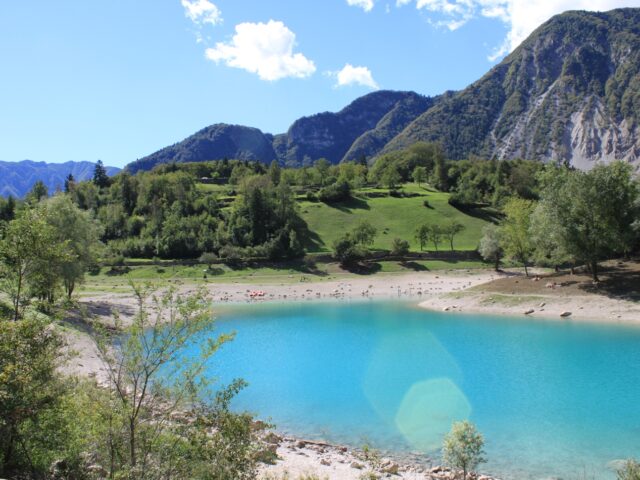
Brenta Dolomites · Lago di Tenno · Andalo & Paganella · Lake Garda North (Riva & Torbole)