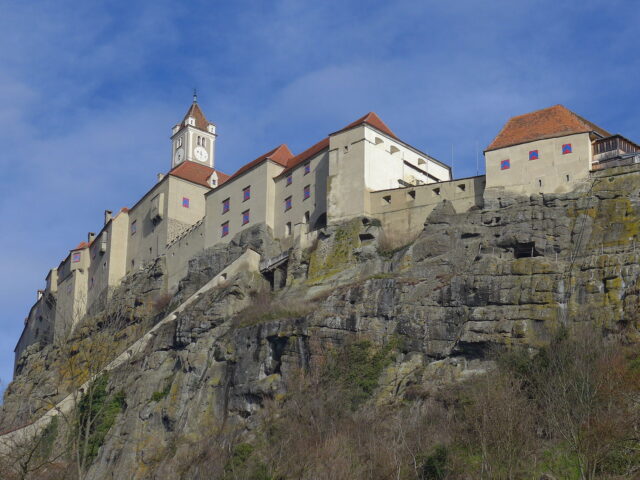
Hochosterwitz Castle
Carinthia's landmark with 14 gates
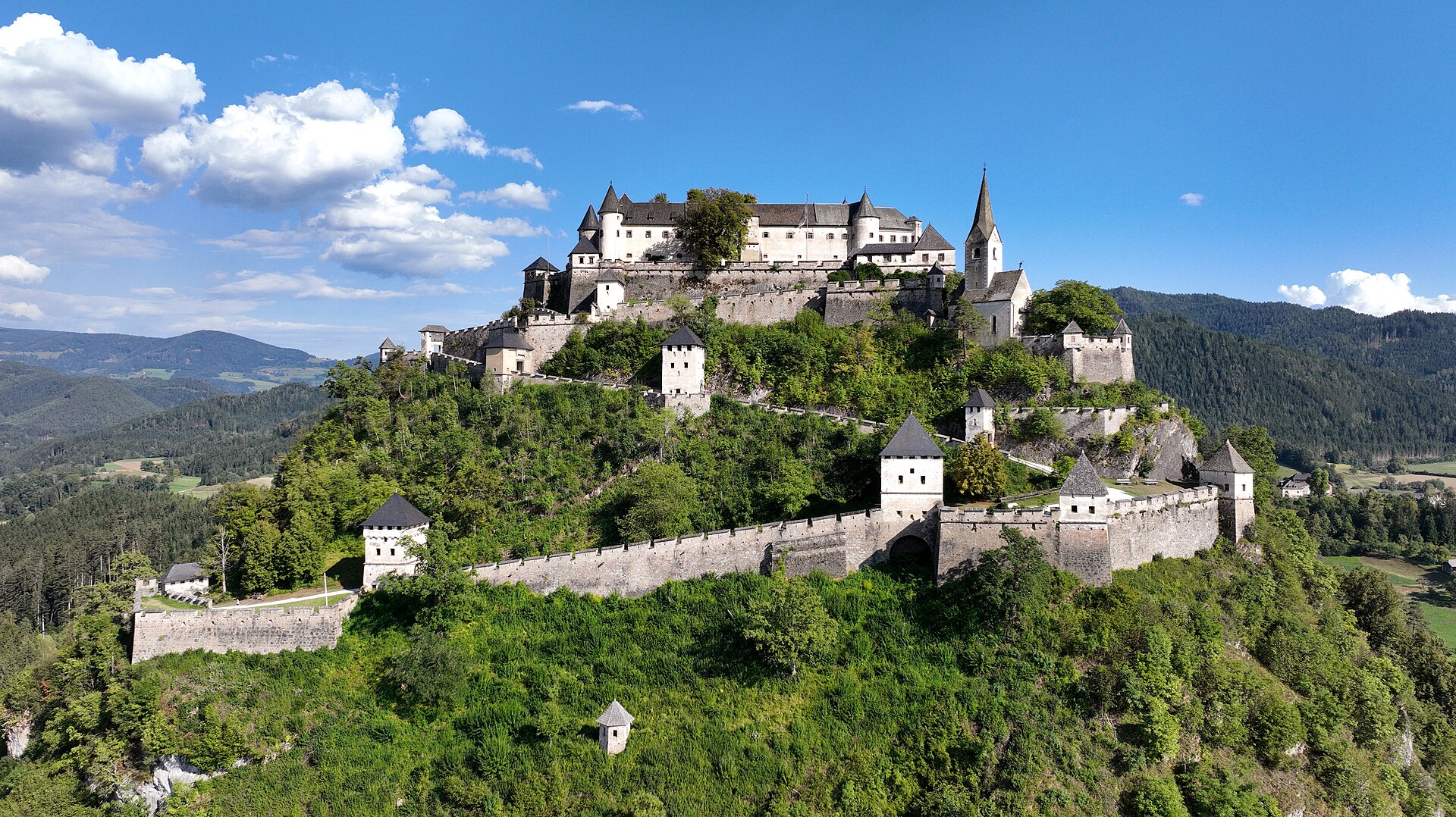
Photo: C.Stadler/Bwag / Wikimedia Commons (CC BY-SA 4.0)
Burg Hochosterwitz sits on a rocky cone around 160 m high and is regarded as one of Carinthia's landmarks. The ascent leads through 14 successive gates, an extraordinary medieval fortification. Preserved largely since the 16th century, the castle is visible from afar and today houses a museum.
Highlights
- Striking rocky cone with a castle visible from afar
- Ascent through 14 staggered gates
- Well-preserved 16th-century fortification
- Castle museum and views
Good to know
| Location | Rocky cone, around 160 m high |
| Special feature | 14 successive gates |
| Era | essentially 16th century |
| Region | Central Carinthia |
Practical info
Getting there: By car to Launsdorf/Hochosterwitz; train to St. Veit an der Glan.
Best time: Roughly Easter to October (please verify).
Cost: Admission and any lift payable (please verify).
Safety: The ascent on foot is steep; sturdy footwear.
Tips:
- Walk up through all 14 gates for the full experience
- Combine with a visit to St. Veit
Background & History
Hochosterwitz Castle in Carinthia sits enthroned on a free-standing dolomite rock that rises about 160 metres steeply above the surrounding plain, and is considered one of the most impressive fortifications in Austria. The striking rock is mentioned in documents as early as the early Middle Ages, but the castle received its present form in the 16th century, when the Carinthian governor Georg von Khevenhüller expanded it into an almost impregnable fortress in order to protect the land and its people against the threatened invasions of the Ottomans. From then on the complex was regarded as a symbol of sovereign protection.
The heart of the castle is the famous winding ascent: fourteen gates staggered one behind the other, each fitted with its own defensive devices and traps, wind their way up the rock and made a frontal assault nearly hopeless. The castle was never conquered and remains to this day in the possession of the Khevenhüller family, who preserved it over the centuries. A well-known legend tells of a siege during which the almost starved defenders demonstratively threw their last ox over the wall in order to feign abundant supplies to the attackers, whereupon the latter withdrew disheartened. Thus Hochosterwitz combines defensive history with living legend and ranks among the best-preserved castles in the entire Alpine region.
To make your trip run smoothly , our guides and gear tips for this destination: