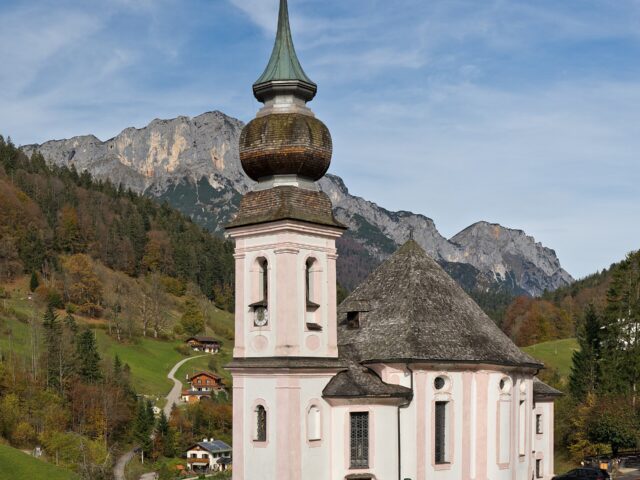
Parish church of St. Sebastian, Ramsau
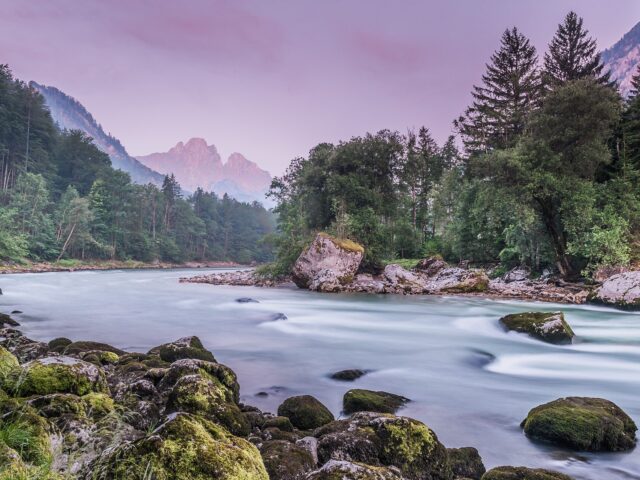
The most photographed church scene in the Alps, with a wooden footbridge over the Ramsauer Ache
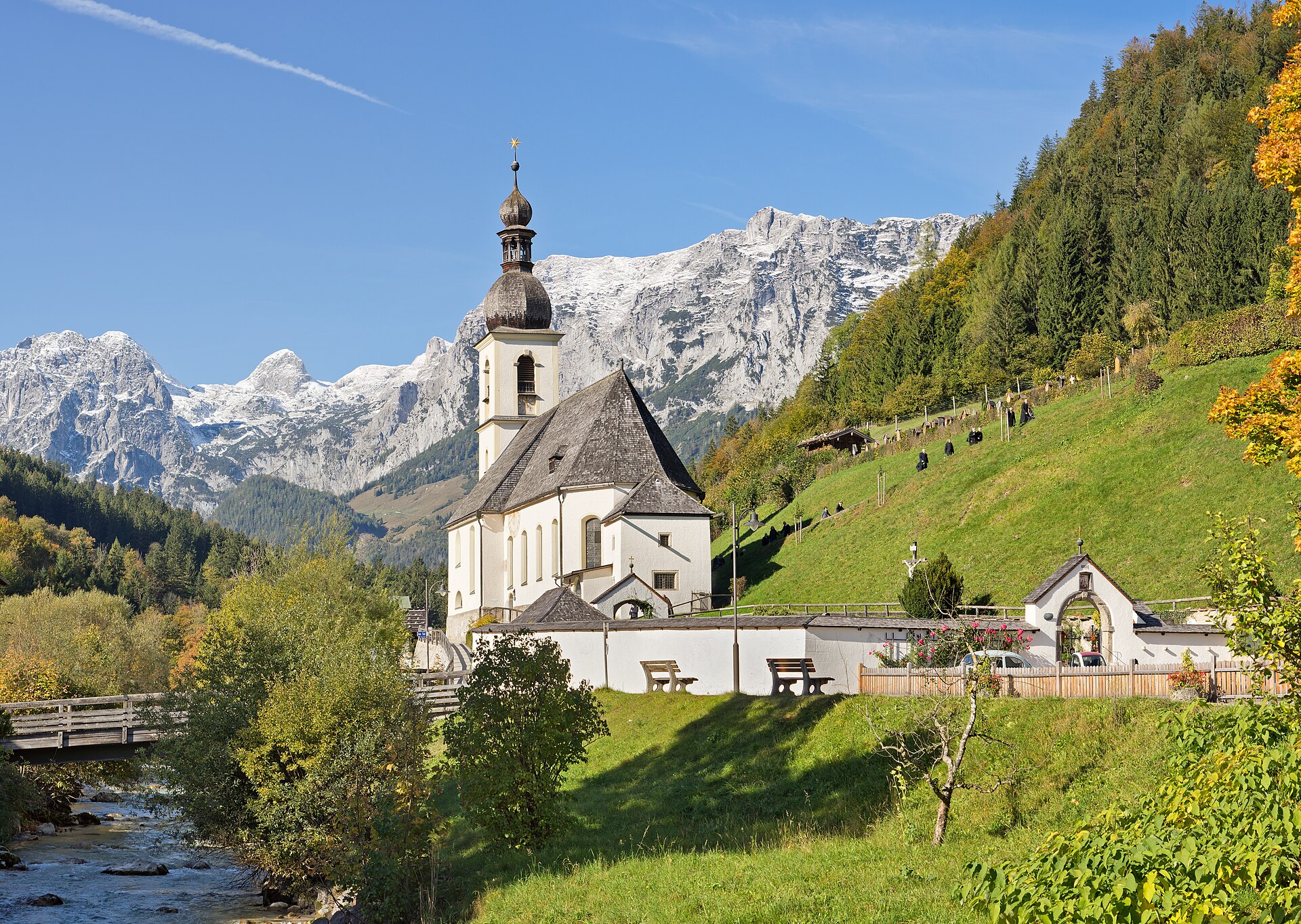
Photo: Jörg Braukmann / Wikimedia Commons (CC BY-SA 4.0)
Address
Im Tal 73, 83486 Ramsau bei Berchtesgaden, Bayern
GPS
47.6074, 12.8950
Late-Gothic parish church from 1512 in the centre of Ramsau, world-famous as a photo motif: a wooden footbridge over the Ramsauer Ache with the church and the Reiter Alpe behind.
Highlights
- Classic view: wooden bridge, the Ramsauer Ache and the church with a mountain backdrop
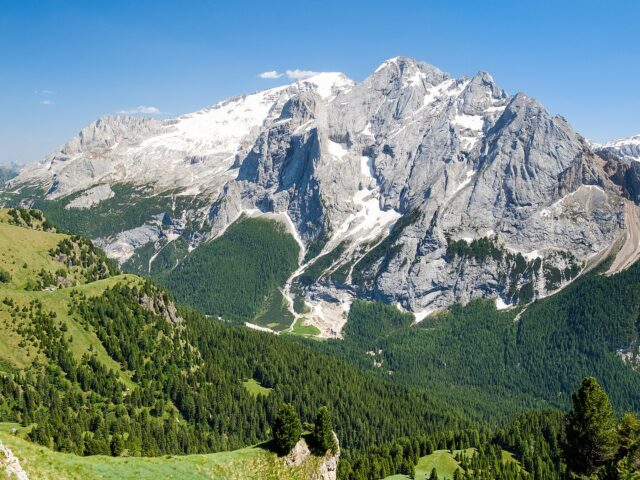
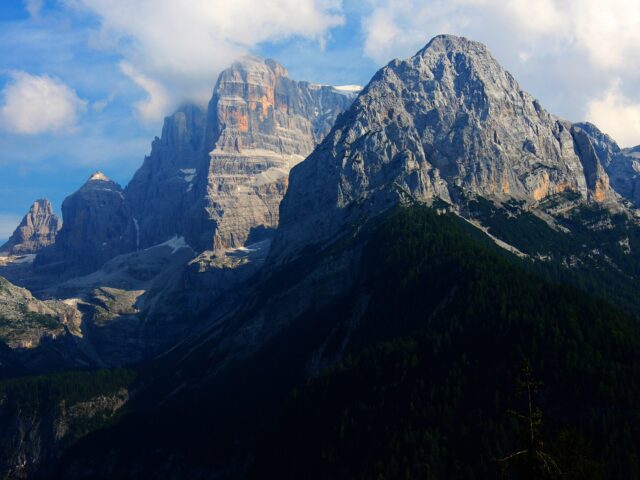
- Reiter Alpe as a striking ridge in the background
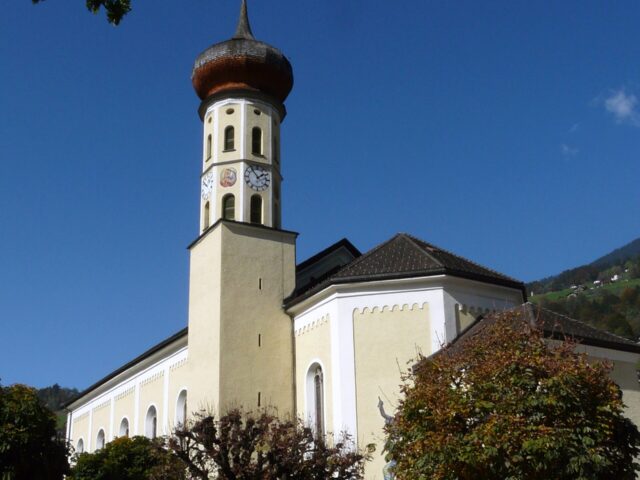
- Late-Gothic architecture with a baroque onion dome
- Historic painters' motif, one of the most depicted church scenes in the Alps
- Starting point for hikes towards Hintersee/Zauberwald and the Wimbachklamm
Good to know
| Year built | 1512 (late Gothic), onion dome around 1700 |
| Denomination | Roman Catholic |
| Patron saint | St. Sebastian |
| Location | Village centre of Ramsau bei Berchtesgaden |
Practical info
Getting there: By car via the B305 to Ramsau; by public transport by bus from Berchtesgaden station to Ramsau Kirche.
Best time: Year-round; photographically especially in spring/autumn and in snow, early morning light for the classic motif.
Duration: A short stop of 15–30 minutes; longer with a walk along the river.
Cost: Visit free; parking fees possible (please verify).
Tips:
- For the iconic photo, choose the spot at the footbridge downstream
- Note service times and enter the church respectfully
- Combine with a visit to the Hintersee and Zauberwald
Background & History
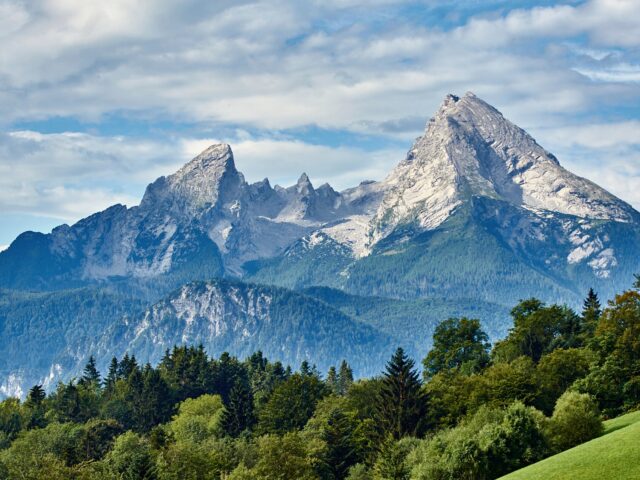
The parish church of St. Sebastian in Ramsau near Berchtesgaden is known far beyond the region, less for its size than for its image: framed by the clear mountain stream Ramsauer Ache, an old wooden bridge and the mighty backdrop of the Reiteralm and Watzmann massifs, it is regarded as one of the most photographed church scenes in the entire Alps. The origins of the church reach back into the late Middle Ages; its dedication to Saint Sebastian, one of the classic patrons against the plague, suggests that it was meant to offer comfort and protection in times of epidemics.
The simple house of worship, with its characteristic onion-domed tower, embodies the popular culture of the Berchtesgaden region, deeply rooted in faith, which for centuries was subject to the ecclesiastical principality of the Augustinian canons of Berchtesgaden. Inside, and in the surrounding cemetery, Baroque furnishings and old grave crosses have been preserved, which tell of a long tradition of mountain piety. That this modest place appears today on countless postcards and paintings it owes to the perfect harmony of the small church and the overwhelming mountain backdrop.
To make your trip run smoothly , our guides and gear tips for this destination: