Aletschgletscher
The largest glacier in the Alps, UNESCO World Heritage
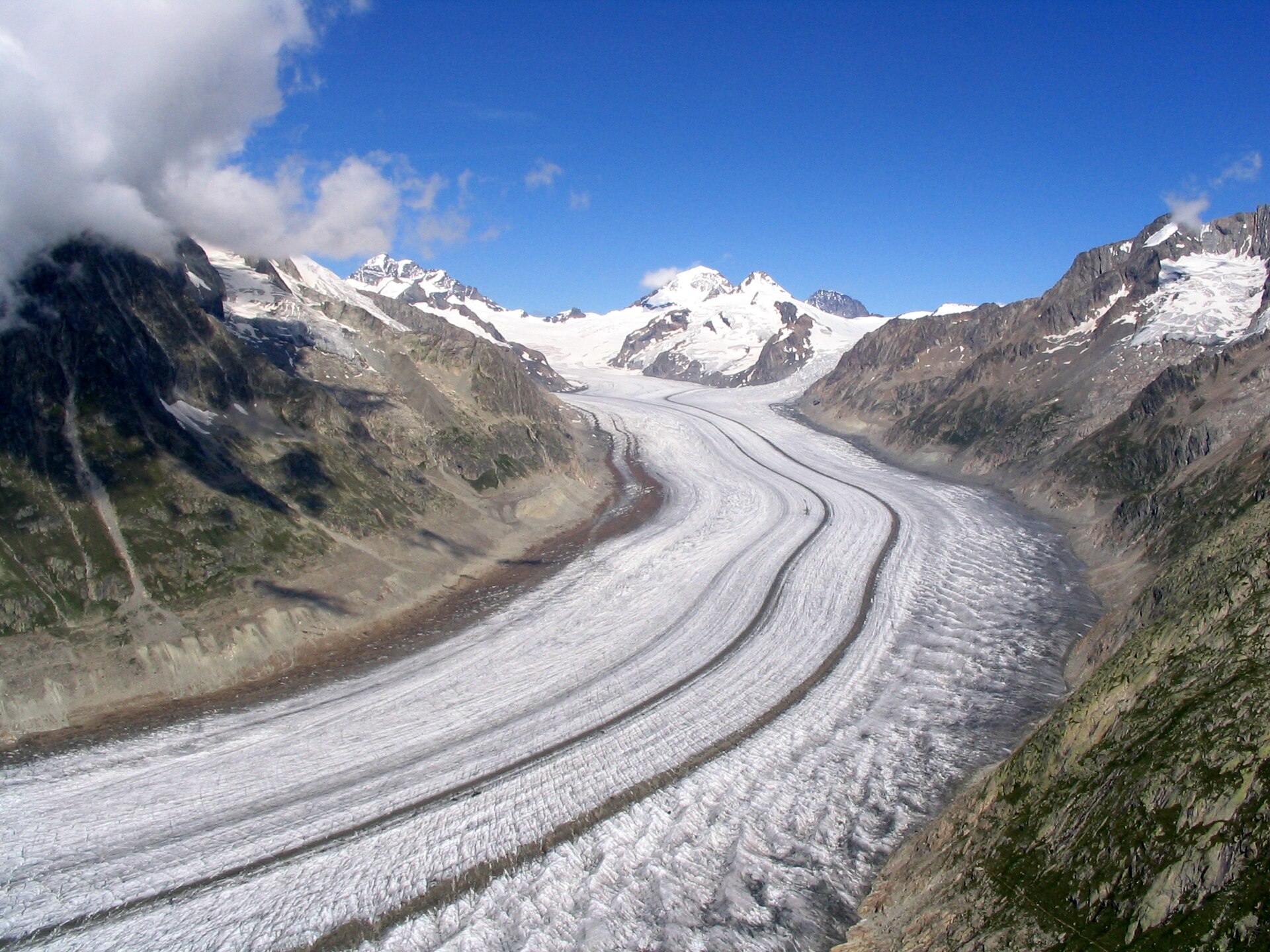
Photo: Dirk Beyer / Wikimedia Commons (CC BY-SA 3.0)
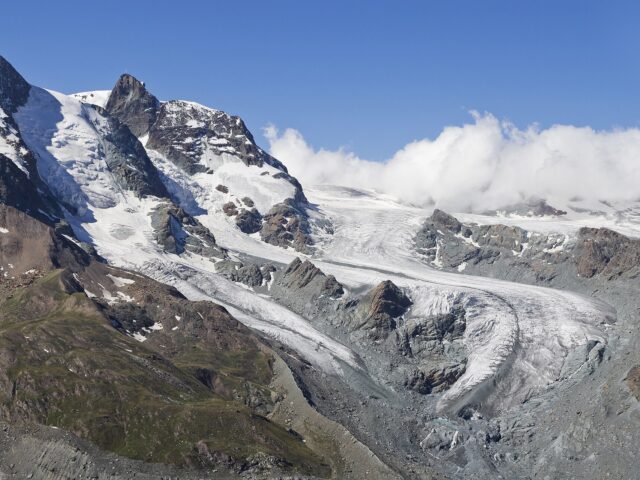
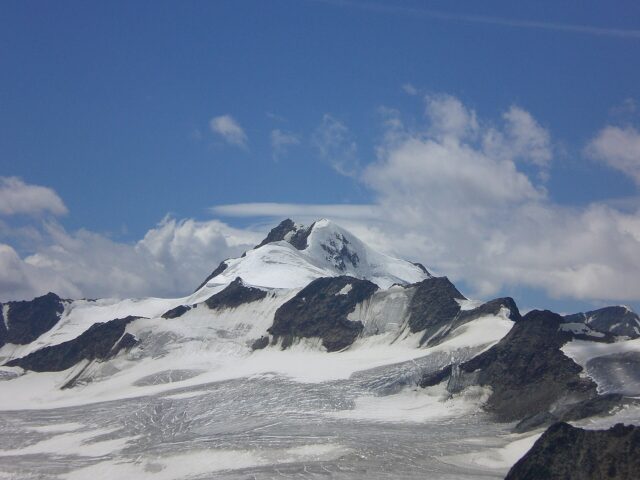
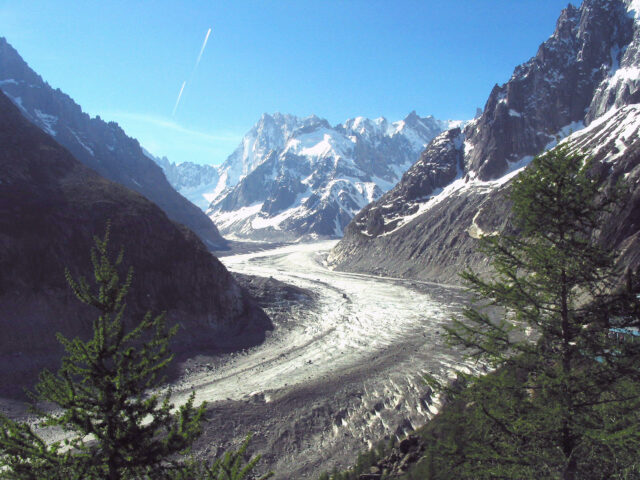
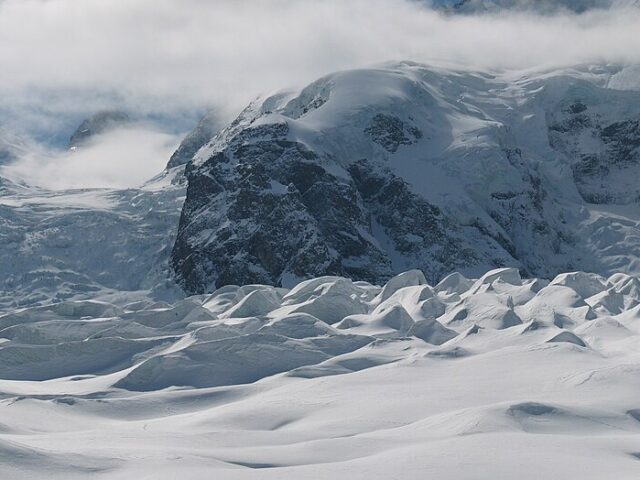
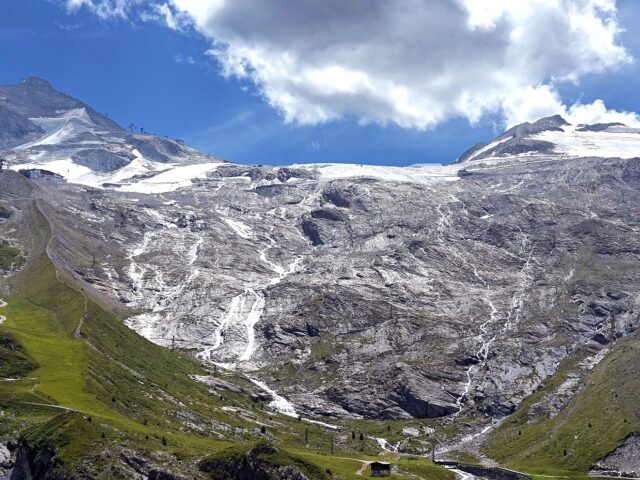
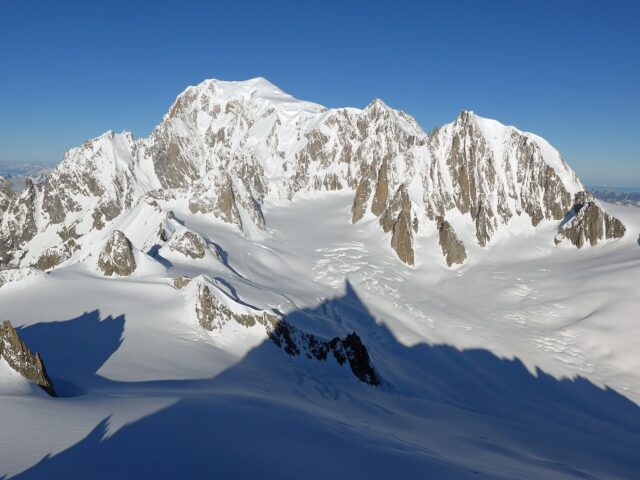
The Great Aletsch Glacier is, at around 20 km long, the longest and largest glacier in the Alps and the heart of the UNESCO World Heritage Site Swiss Alps Jungfrau-Aletsch. From the Aletsch Forest and the viewpoints Eggishorn, Bettmerhorn and Moosfluh you look out over the mighty stream of ice, fed by the firn fields of the Jungfrau region. Like all Alpine glaciers, it is retreating markedly as a result of warming.
Highlights
- Panoramic view from the Eggishorn (2,869 m) over the entire stream of ice
- Aletsch Forest with centuries-old Arolla pines
- The Moosfluh viewpoint and the car-free villages of the Aletsch Arena
- Guided glacier walks with a mountain guide
Good to know
| Length | around 20 km (longest glacier in the Alps) |
| World Heritage | UNESCO Swiss Alps Jungfrau-Aletsch (since 2001) |
| Viewpoint mountains | Eggishorn, Bettmerhorn, Moosfluh |
| Starting points | Riederalp, Bettmeralp, Fiescheralp (car-free) |
Practical info
Getting there: By train into the Rhône valley (Mörel/Betten/Fiesch), then cable cars up to the car-free high terraces.
Best time: Hiking and views June to October; winter sports December to April.
Cost: Cable cars payable (please verify); hiking trails free.
Safety: Stepping onto the glacier is only safe with equipment and a guide (crevasse-fall risk). The views and high trails are unproblematic.
Tips:
- The high trail from Riederalp to Bettmeralp offers hours of glacier views
- Choose clear, sunny days, the stream of ice is then most impressive
Background & History
The Great Aletsch Glacier is the mightiest ice stream of the Alps, a good twenty kilometres long ribbon of firn and ice that flows down from the high-Alpine region around the Jungfrau, Mönch and Eiger. At the famous Konkordiaplatz several firn fields unite into a mighty stream, whose ice at this point is several hundred metres thick and whose slow movement over the millennia has gouged out the valleys. Since 2001 the region, as part of the Swiss Alps Jungfrau-Aletsch World Heritage, has belonged to the natural heritage of UNESCO, recognised as an outstanding example of Alpine glaciation and of the forces that shape the high mountains.
At the edge of the ice grows the Aletsch Forest, an ancient stand of Swiss stone pines and larches, whose gnarled trees rank among the oldest in Switzerland and which is preserved today as a nature reserve. From the surrounding viewpoint mountains such as the Eggishorn or the Bettmerhorn one overlooks the entire course of the glacier, and with a little luck the reintroduced bearded vulture circles high above. At the same time the Aletsch Glacier is a striking testimony to change: old markers, maps and photographs show how far the tongue of ice has retreated in recent decades. Thus this place is today both a natural wonder and a warning sign of climate change.
To make your trip run smoothly , our guides and gear tips for this destination: